

In scientific research, precision and control are crucial elements that can define the success of experiments. Enter environmental rooms, specialized spaces crafted to meet stringent temperature, humidity, and air quality requirements. These rooms advance scientific inquiry by providing a controlled environment for meticulously managing variables.
Here are some applications of environmental rooms in scientific research. Discover how these spaces contribute to breakthroughs across various scientific fields.
Why Environmental Rooms Matter in Research
Scientific research often involves complex variables that can affect outcomes in unpredictable ways. Achieving consistent results requires environments with stable conditions. Environmental rooms offer solutions for this need. They allow researchers to control critical factors such as temperature and humidity. The benefits of using these rooms extend to enhancing the accuracy of experimental data, thereby supporting the integrity of research findings.
Such accuracy is indispensable for researchers in pharmacology, biology, and chemistry. Controlled environments facilitate experiments that require specific conditions, ensuring that the data collected is valid and reproducible. This precision ultimately contributes to the advancement of scientific knowledge and innovation.
Applications of Environmental Rooms in Biology
Biological research often demands precise climate control to facilitate the growth and study of living organisms. Environmental rooms fulfill this requirement by offering adjustable settings tailored to different biological specimens. Researchers can cultivate plants and microorganisms optimally, leading to more reliable outcomes.
Environmental rooms simulate natural habitats to study plant growth, enabling researchers to observe plant responses to various stimuli. This capability proves invaluable when studying genetics or environmental stressors. The same holds for microbiological research, where the consistent environment aids in observing microbial behavior and interactions.
Chemistry and Environmental Rooms
Environmental rooms are a boon to the field of chemistry. Many chemical reactions are sensitive to temperature and humidity fluctuations. Environmental rooms provide stable conditions necessary for conducting experiments with precision. This stability ensures that external factors do not interfere with the studied chemical processes.
These rooms are ideal for storing sensitive chemical compounds that may degrade under improper conditions. Maintaining consistent temperatures, they help preserve the integrity of these compounds over time, which is critical for researchers who rely on accurate chemical compositions for their studies.
Pharmaceutical Advancements With Environmental Rooms
In pharmaceutical research, environmental rooms hold significant importance. Drug development requires rigorous testing under controlled conditions to determine efficacy and safety. Environmental rooms allow researchers to create environments that mimic various physiological conditions. This capability aids in understanding how drugs interact with human biology.
Stability testing of pharmaceuticals also benefits from environmental rooms. Drugs need to undergo tests to assess stability over time. These rooms provide insights into potential degradation pathways by simulating long-term storage conditions. This information is essential for determining shelf life and ensuring the safety of pharmaceutical products.
Engineering and Construction Applications
Beyond traditional scientific fields, engineering and construction sectors also harness the power of environmental rooms. These spaces find applications in testing materials and products under simulated environmental conditions. Engineers can evaluate how materials respond to temperature changes, humidity, and other factors influencing performance and durability.
Construction companies utilize environmental rooms to assess building materials' resilience before deployment. This testing helps identify potential weaknesses that could compromise structural integrity. By subjecting materials to controlled stressors, companies gain valuable insights into improving construction techniques and ensuring longevity.
Modular Enclosures in Environmental Rooms
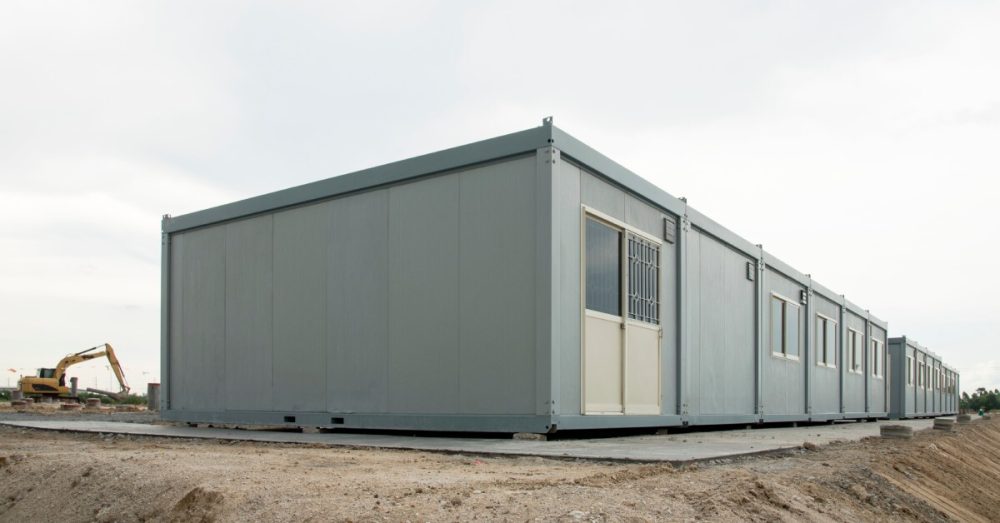
Modular enclosures have emerged as an innovative solution within the realm of environmental rooms. These customizable structures offer flexibility and scalability, allowing researchers to adapt environments to suit specific needs. With modular enclosures, environmental rooms can be reconfigured easily, accommodating new experiments without extensive renovations.
The ability to tailor modular enclosures to various research requirements enhances efficiency and cost-effectiveness. Scientists can optimize available space and resources while maintaining the desired control over experimental conditions. This adaptability makes modular enclosures a preferred choice for research institutions seeking dynamic solutions.
The Role of Environmental Rooms in Climate Research
Climate research relies heavily on environmental rooms to simulate diverse weather conditions. Researchers can recreate scenarios ranging from arid deserts to humid rainforests, studying how different factors impact ecosystems. These controlled environments enable scientists to investigate climate change effects with precision.
By experimenting within environmental rooms, researchers gain valuable insights into the potential impacts of changing climates on biodiversity. This knowledge informs conservation efforts and policy decisions aimed at mitigating adverse effects. The controlled conditions also allow for the replication of experiments, bolstering the credibility of research findings.
Enhancing Food and Agriculture Research
The agricultural sector benefits immensely from environmental rooms. Researchers can replicate growing conditions for crops in various regions, optimizing yield potential. By fine-tuning temperature, humidity, and light levels, scientists explore effective farming practices that increase productivity sustainably.
In food research, environmental rooms facilitate the study of storage conditions on preserving freshness and nutritional value. Understanding how different factors affect food quality supports the development of improved preservation techniques. These advancements contribute to reducing waste and enhancing food security globally.
Environmental Rooms in Aerospace Research
Aerospace research demands rigorous equipment testing under extreme conditions. Environmental rooms simulate challenges encountered in space, providing engineers with insights into equipment performance. These rooms enable thorough assessments of spacecraft components by replicating vacuum conditions and temperature fluctuations.
Testing within controlled environments ensures that equipment can withstand harsh mission conditions. This capability enhances safety and reliability, which are crucial factors in designing spacecraft and satellites. Environmental rooms play a major role in advancing aerospace technology and exploration endeavors.
Modular Enclosures for Customizable Research Environments
Research institutions continuously seek adaptability. Modular enclosures offer solutions, enabling researchers to customize spaces according to specific experimental requirements. These enclosures can be reconfigured swiftly, allowing seamless transitions between different experiments.
Modular enclosures also promote efficient resource use by minimizing downtime associated with reconfiguration. Researchers benefit from flexibility without sacrificing control over environmental variables. Integrating modular enclosures into environmental rooms empowers institutions to pursue diverse research initiatives with ease.
Environmental rooms serve as vital tools for scientific research across multiple disciplines, highlighting their applications of environmental rooms in scientific research. Their uses range from biology and chemistry to engineering and agriculture. Researchers rely on these controlled environments to explore the intricacies of nature, drive innovation, and contribute to scientific understanding.
Modular enclosures enhance adaptability, making environmental rooms more versatile. For those aiming to advance research, these solutions pave the way for remarkable scientific breakthroughs. Contact National Partition today to explore how our modular enclosures can elevate your research capabilities!