

Achieving a certificate as a manufacturer is a valuable milestone. Certification validates that a company meets stringent regulatory and quality standards, assuring customers, regulators, and partners that processes and products are safe and reliable.
The path to certification, however, can be complex. Standard cleanroom construction creates bottlenecks due to sequential construction dependencies and the required multi-party coordination. You can’t install HVAC systems until after finishing the walls, test air filtration until the ductwork takes place, or begin validation until construction concludes. Someone must inspect and improve every phrase.
Modular cleanrooms represent a paradigm shift that addresses these challenges head-on, showing how simplicity can aid in certification. With modular cleanrooms, manufacturers achieve prompt approvals, reduced compliance costs, and enhanced operational flexibility.
Cleanroom Certification Requirements
Regulatory bodies establish cleanroom standards to protect product integrity and end-user welfare. The International Organization for Standardization (ISO) sets global cleanroom standards, while industry-specific organizations, like the Food and Drug Administration (FDA), add additional requirements.
ISO 14644
ISO 14644 serves as the primary international standard for cleanroom classification and testing. This comprehensive framework defines contamination control levels, monitoring procedures, and operational protocols that facilities must maintain. The standard categorizes cleanrooms from ISO Class 1 (the cleanest) to ISO Class 9. Each level specifies the maximum allowable particle concentrations.
Additional Parameters
Beyond particle control, certified cleanrooms must demonstrate consistent performance across multiple parameters. Air change rates, pressure differentials, temperature control, humidity management, and surface cleanliness all require ongoing monitoring and documentation. Facilities must also establish personnel training programs and material transfer protocols that meet regulatory expectations.
There are rigorous documentation requirements for cleanroom certification. Regulatory bodies expect comprehensive records covering design specifications, installation procedures, operational protocols, maintenance schedules, and deviation investigations.
The Advantages of Modular Design in Certification
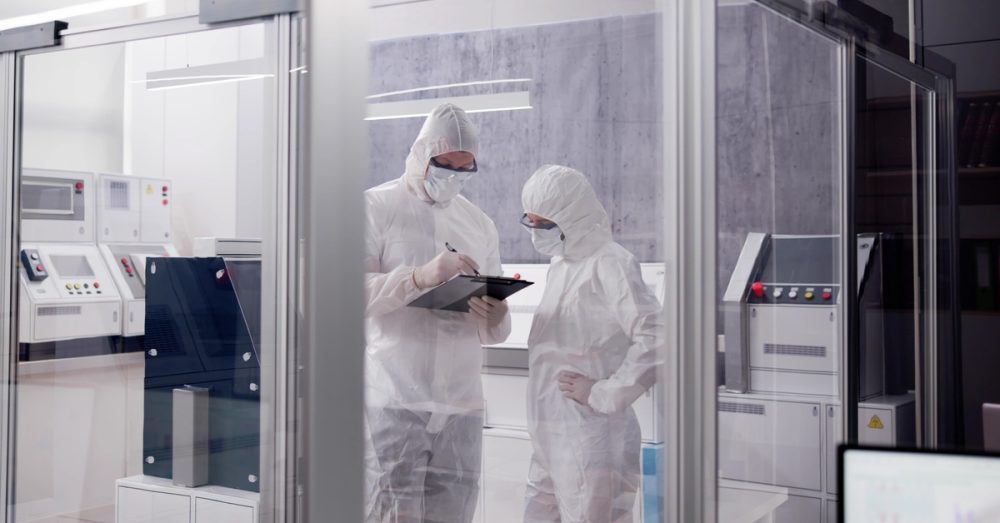
When companies evaluate clean room enclosure options, they typically weigh the costs, speed, and compliance requirements. Modular design stands out because it directly addresses all three. Unlike traditional builds, modular cleanrooms arrive prefabricated with quality-controlled components, reducing the risk of errors and delays during installation. Their design prioritizes regulatory alignment, meaning organizations can more easily demonstrate compliance during audits. Let’s discuss a few more advantages.
1. Consistent Environmental Control
Certification depends on the ability to demonstrate control over variables such as air quality and humidity. Modular cleanrooms feature advanced HVAC systems, HEPA or ULPA filtration, and precise airflow designs. They allow companies to meet ISO classifications and Good Manufacturing Practices (GMP) standards.
Because manufacturers construct modular systems with prefabricated panels and components, they maintain tight tolerances that minimize leaks and reduce contamination risks. The result is a stable, verifiable environment that simplifies the process of proving compliance to auditors.
2. Adhere to Changing Standards
Modular cleanrooms aid in certification because regulatory changes require facility modifications. The modular approach provides unprecedented flexibility. When new standards emerge or existing requirements evolve, you can modify your cleanrooms without extensive reconstruction. That’s because modular systems accommodate regulatory changes through component-level modifications rather than system-wide reconstructions. You can easily implement HEPA filtration efficiency upgrades, environmental monitoring enhancements, and control system modifications.
3. Deployment Speed
The installation speed of modular cleanroom systems creates substantial advantages in the certification process. While traditional cleanrooms may require months for construction and certification, modular systems can achieve the same results in weeks, depending on project complexity.
Acceleration stems from the parallel processing capabilities inherent in modular construction. While site preparation occurs, modular components undergo final manufacturing and testing in the factory.
The reduced installation timeline directly impacts certification schedules. Regulatory agencies can begin preliminary reviews of factory documentation while installation proceeds, allowing for faster approval processes. The predictable nature of modular installation also enables more accurate scheduling of regulatory inspections and testing phases.
4. Scalable Operations
Certification is not a one-time event; it requires continuous compliance as organizations grow. Modular cleanrooms allow businesses to scale their facilities in line with production demands.
Whether adding new processes, expanding into different classifications, or accommodating larger production runs, modular systems grow with the company. As a result, certification remains achievable as operations evolve.
5. Documented Quality
Certification depends heavily on documentation and traceability. The documents are proof of certification audits. In addition to installation records and technical specifications, modular cleanrooms typically include validation packages that detail testing procedures and performance verification. Modular cleanroom manufacturers like National Partitions provide detailed specifications, performance data, and installation records.
Meet Industry-Specific Requirements
Across all industries, modular solutions minimize contamination risks.
- Pharmaceuticals and biotech: Modular systems help meet GMP and FDA guidelines by controlling microbial contamination and ensuring sterile manufacturing conditions.
- Medical devices: Modular cleanrooms support the ISO 13485 certification by providing controlled environments for device assembly and packaging.
- Electronics and aerospace: Certification in these fields requires protection from electrostatic discharge and microscopic particles.
- Food and beverage: HACCP compliance demands clean zones for processing goods.
Cost Efficiency and ROI in Certification
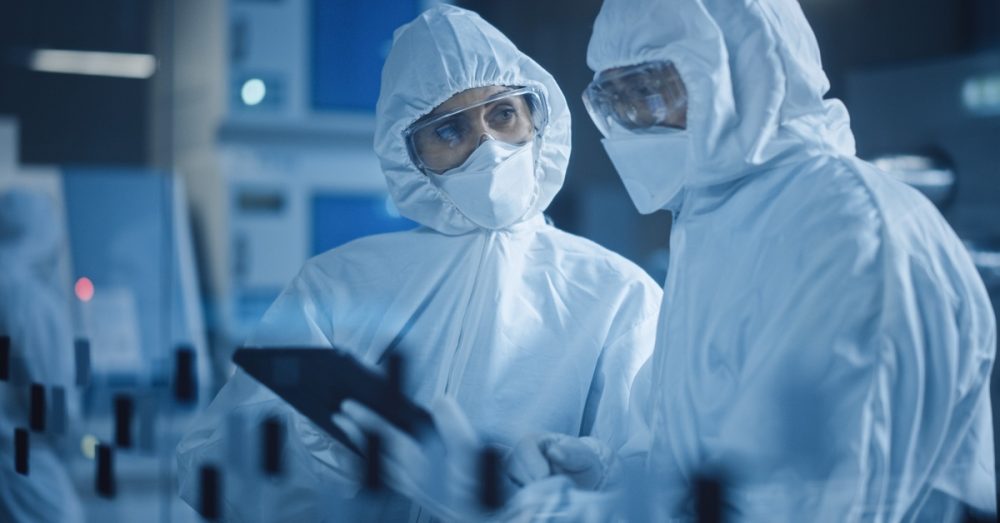
Traditional cleanroom construction involves significant capital investment and lengthy project timelines. Modular systems offer cost advantages that directly support certification goals.
- Reduced construction costs: Prefabrication lowers labor and material expenses.
- Fewer testing requirements: Because manufacturers build modular cleanrooms with standardized, pre-engineered components, they commonly require less on-site validation and retesting.
- Prompt return on investment: Quicker deployment accelerates time to certification and product launch.
- Minimal downtime: Reconfiguration or expansion does not require full facility shutdowns.
- Financial advantages: Durable modular components reduce maintenance costs while complying with industry regulations.
Together, these savings ensure that organizations can pursue certification more efficiently, without sacrificing quality or compliance.
Successfully Comply With Regulations
Manufacturing companies seeking reliable paths to cleanroom certification find that modular construction offers clear advantages over traditional building methods. The combination of factory-controlled quality, accelerated timelines, comprehensive documentation, and adaptive capabilities creates a powerful solution for regulatory compliance challenges.
National Partitions offers decades of experience in modular cleanroom design and installation to every certification project. Our systematic approach to factory testing, installation, and documentation ensures predictable outcomes that meet the most stringent regulatory requirements. Companies trust our team to deliver certified facilities on time and within their respective budgets.
Are you ready to explore how modular cleanrooms can accelerate your certification timeline? Contact National Partitions today to discuss your specific requirements.