

Clean rooms serve as critical environments in manufacturing, pharmaceuticals, and scientific research. These controlled spaces maintain extremely low levels of pollutants such as dust, airborne microbes, and chemical vapors. Industries rely on these environments to ensure product safety, reliability, and compliance with stringent regulatory standards.
Maintaining the integrity of a clean room requires a rigorous and multifaceted approach. Facility managers must implement strict protocols governing personnel behavior, cleaning procedures, and equipment maintenance. The effectiveness of a clean room depends entirely on the consistent execution of these strategies. Here you’ll find the essential maintenance approaches required to keep cleanrooms functioning at optimal levels.
Types of Contamination
Understanding contamination is key to effective clean room maintenance. Even minor contamination events can lead to significant financial losses or compromised product integrity. Contamination falls into three main types:
Physical Contaminants
Dust, fibers, and skin cells shed by personnel can settle on equipment and products, leading to defects or failures.
Biological Contaminants
Bacteria, fungi, and viruses introduced by poor hygiene or improper gowning can thrive in areas with moisture or organic matter. Rigorous disinfection and monitoring are essential to control biological risks.
Chemical Contaminants
Vapors, gases, and residues from cleaning agents or construction materials can compromise processes. Proper selection and removal of materials help minimize this risk.
Contamination Sources
External sources include leaks in filtration or dirt tracked in, while internal sources involve particles shed by people, equipment, or processes. Identifying the source helps determine the right mitigation strategy.
Cleaning Protocols
Teams must establish a standard operating procedure for cleaning. Cleaning personnel must follow a top-down approach to prevent recontamination of cleaned surfaces. Gravity causes particles to settle downward, so starting at the ceiling ensures that any dislodged dust falls to the floor, which the team cleans last.
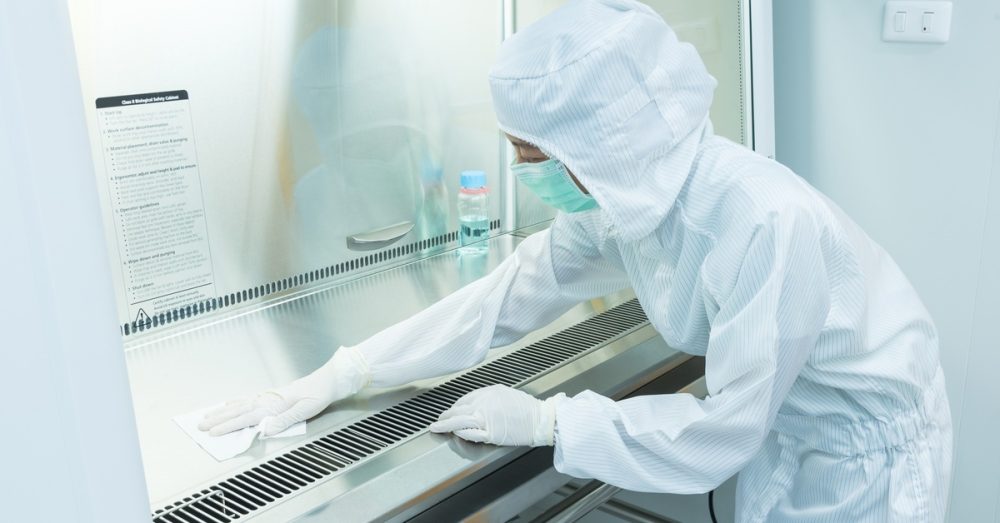
Wiping techniques play a crucial role in capturing particles rather than spreading them. Staff should use unidirectional strokes with overlapping paths. Circular motions often re-deposit contaminants. Personnel must use clean room-specific wipers that do not shed fibers or particles.
The selection and rotation of cleaning agents are vital for preventing microbial resistance. Facilities often alternate between distinct types of disinfectants to ensure broad-spectrum efficacy. A typical rotation might involve a phenolic agent followed by a quaternary ammonium compound. This strategy prevents resident flora from developing resistance to a single chemical agent.
Residue removal constitutes a critical final step in the cleaning process. Disinfectants often leave behind salts or films that can harbor contaminants or damage surfaces. Cleaning teams typically use sterile water or isopropyl alcohol to rinse surfaces after disinfection. This step restores the surface to a neutral state and prevents chemical buildup.
Maintenance Schedules
The frequency of cleaning depends heavily on the classification of the clean room. An ISO Class 5 environment requires more frequent attention than an ISO Class 8 facility. Facility managers must tailor schedules to match the operational activity and risk level of the specific room. Adhering to a strict schedule ensures that contamination levels remain within acceptable limits.
Daily Maintenance
Daily maintenance tasks typically focus on high-traffic areas and critical work surfaces. Personnel should wipe down benchtops, door handles, and pass-through chambers at the beginning and end of each shift. Floors usually require mopping on a daily basis to control particulate settling. Waste removal must occur daily to prevent the accumulation of potential contaminant sources.
Weekly Maintenance
Weekly cleaning routines address areas that are less accessible or prone to gradual buildup. This might include wiping down walls, windows, and storage shelves. Staff should also inspect and clean carts or mobile equipment during this weekly cycle. These tasks prevent the long-term accumulation of dust in peripheral areas.
Monthly Maintenance
Monthly or quarterly maintenance involves a deep clean of the entire facility. This includes cleaning light fixtures, ceiling grids, and the areas behind equipment. Maintenance teams should also inspect and replace sticky mats and check the integrity of seals and gaskets.
Advanced Technologies
Innovation in cleaning technology offers new ways to enhance clean room sterility. Automated systems reduce the reliance on human labor, which is the primary source of contamination. Robotics can perform repetitive cleaning tasks with consistent pressure and coverage. These machines operate without shedding particles or getting tired.
Vaporized hydrogen peroxide systems offer another advanced decontamination solution. This method involves filling a sealed space with hydrogen peroxide vapor to sterilize all exposed surfaces. It proves highly effective for bio-decontamination in pharmaceutical clean rooms. The vapor penetrates hard-to-reach areas that manual wiping might miss.
Smart monitoring systems provide real-time data on environmental conditions. Sensors can detect spikes in particle counts or changes in pressure differentials immediately. This instant feedback allows facility managers to respond to contamination events before they impact production. Integration of these sensors leads to a more proactive maintenance strategy.
Self-cleaning surface technologies are also gaining traction in the industry. These materials contain antimicrobial coatings that inhibit the growth of bacteria and fungi. While they do not replace standard cleaning, they provide an additional layer of protection. These surfaces actively work to reduce the burden between cleaning cycles.
Benefits of Modular Cleanrooms for Cleaning
Modular cleanroom designs offer distinct advantages regarding maintenance and cleaning. These systems use pre-fabricated components that feature smooth, non-porous surfaces. The lack of crevices and pores prevents contaminants from accumulating and makes wiping significantly easier. Manufacturers design these components specifically to withstand harsh cleaning agents.
A high-quality cleanroom wall system simplifies the cleaning process through flush connections. Traditional construction often results in ledges or gaps where walls meet floors and ceilings. Modular systems utilize coving to create seamless transitions that eliminate these particle traps. This design feature allows cleaning staff to wipe surfaces efficiently without missing corners.
Flexibility in modular design allows for easier upgrades and repairs. If a wall panel becomes damaged or stained, maintenance staff can replace it individually. This capability avoids the need for extensive renovation that generates dust and debris. Facilities can maintain operational status with minimal downtime during these repairs.
National Partitions specializes in providing modular cleanroom solutions that prioritize ease of maintenance. Our systems integrate advanced materials that resist chemical damage and physical wear. Investing in a modular system can significantly reduce the long-term labor costs associated with cleaning. Explore these options to streamline your contamination control strategies.
Criticality of Ongoing Vigilance
Maintaining a clean room is an ongoing battle against entropy and contamination. Success requires a combination of disciplined personnel, rigorous protocols, and appropriate technology. Every person who enters the facility plays a role in preserving the environment's integrity. Training and culture are just as important as the cleaning tools used.
Clean rooms represent a significant investment in infrastructure and operation. Protecting this investment demands a proactive and comprehensive maintenance strategy. By understanding contamination sources and adhering to these maintenance approaches, facilities can ensure consistent cleanroom performance and cleanliness. The result is a safe, compliant, and productive environment that meets the demands of modern industry.